

Colour-coded pegs failed. Planting in sequence works.
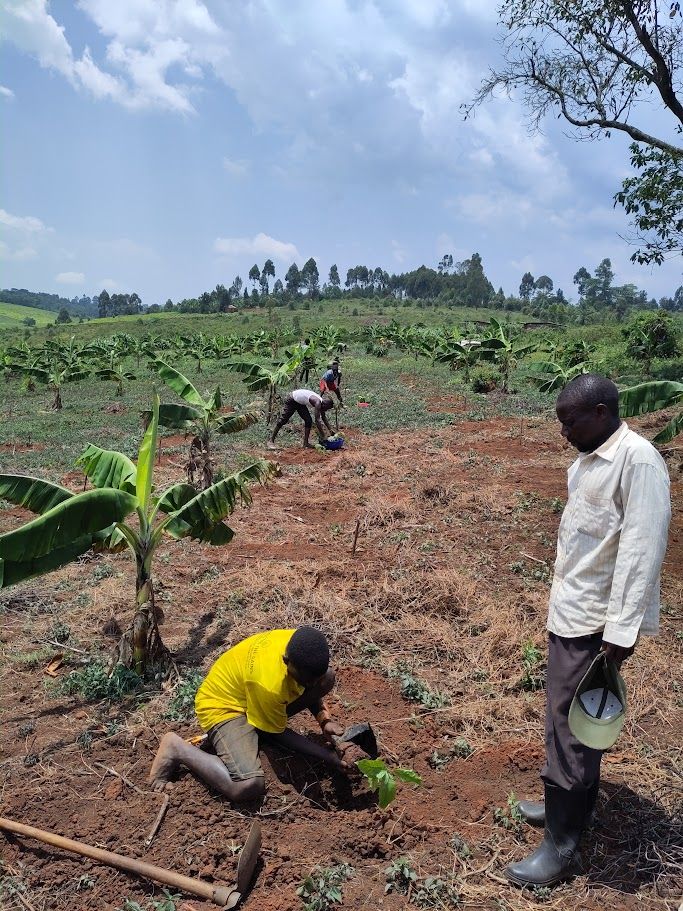
Agroforestry implies several species on the same plot. Complications like this can become messy, unless there is a smart fix. For our first planting round at Kawa Tamu, we thought we had found such a fix for the planting operations: colour-coded pegs, one colour per species, so planters always knew which seedling went into which pit. Yellow for plantain, red for Albizia, and so on. It felt like a smart, low-cost system.
It wasn't. A few weeks of rain and equatorial sun faded the paint on the pegs faster than we expected. By the time planting actually started, the colour coding was unreadable in places, and the result was real disorder on the ground: shade trees ending up in coffee pits, matoke in the pits meant for shade trees. Our carefully designed spacing pattern needed tedious manual correction.
The lesson wasn't 'use better paint.' It was that the sequencing itself was the risk, not the labelling. Going forward, we're planting one species at a time across a whole area, start to finish: matoke first (ideally one season before), then coffee. Once the coffee lines are in, the calliandra rows are obvious, planted directly between them. Albizia then goes into alternating matoke rows. No pegs are needed to remember what goes where, because nothing is planted out of order in the first place.
It's a small operational fix, but it's the kind of thing you only learn by watching a plan fail in the field.